

Introduction
When businesses evaluate an LED video wall against an LCD video wall, they are weighing image quality, installation flexibility, long-term maintenance, and total cost of ownership. Both technologies can serve commercial display projects, but they are not interchangeable. The better option depends on the viewing environment, the desired visual impact, and how the system will be used over its full lifecycle.
Why Buyers Are Choosing LED Video Walls
LED video walls are increasingly specified for projects that demand high brightness, a seamless visual surface, flexible custom sizing, and reliable performance in high-ambient-light environments. Aglare USA’s indoor LED display product line includes multiple cabinet sizes, pixel-pitch options, and wide viewing angles designed for commercial settings including shopping malls, corporate lobbies, conference centers, exhibitions, and public information displays.
Seamless Appearance: The Biggest Visual Differentiator
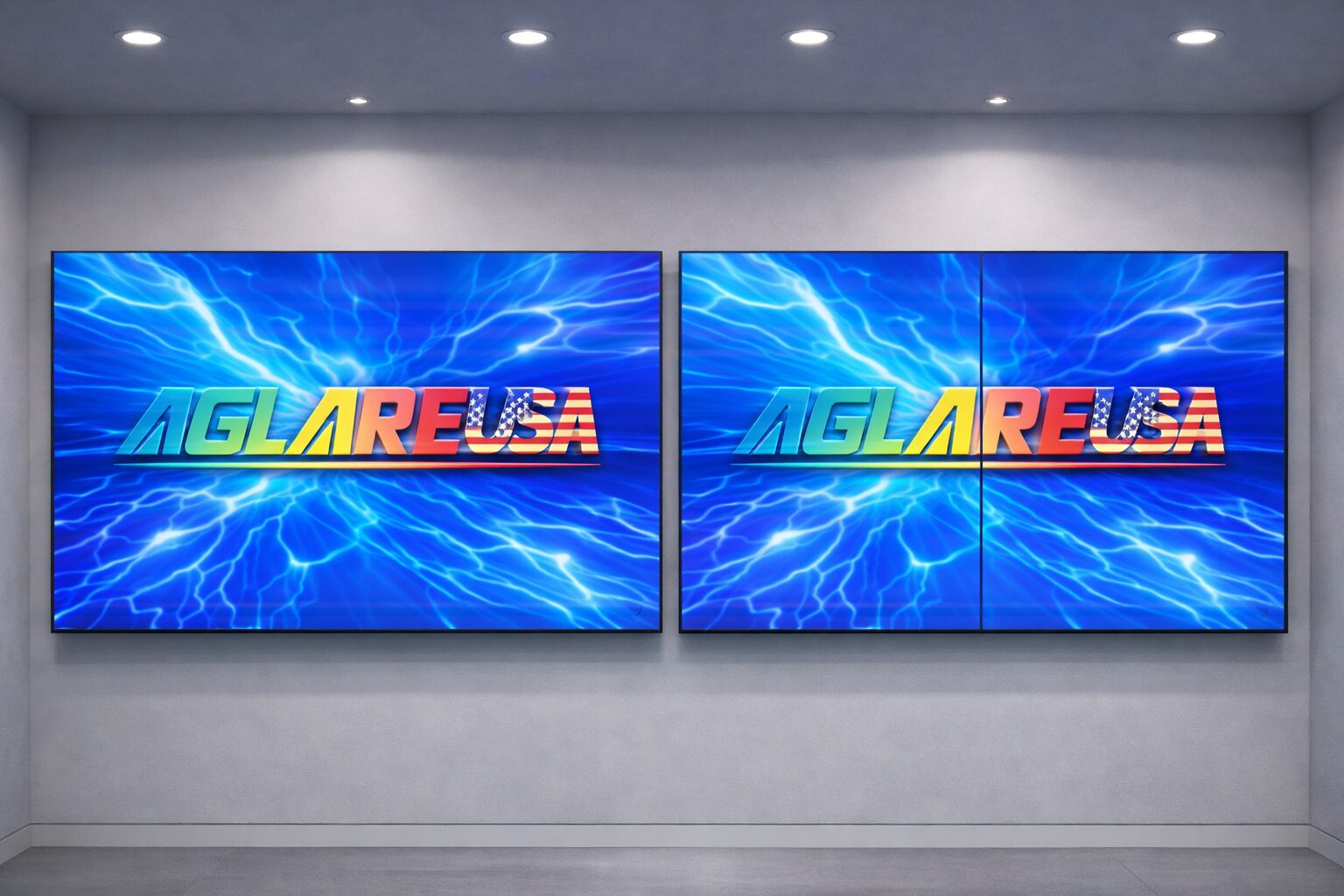
The most obvious difference between the two technologies is bezel visibility. LCD video walls are assembled from individual panels, and even ultra-narrow-bezel units leave visible seam lines that interrupt content across the full display surface. An LED video wall produces a continuous visual surface with no bezels, delivering a cleaner, more immersive viewing experience — especially important for brand-critical environments, premium retail, and large-format advertising.
Brightness and Viewing Experience
LED video walls produce significantly higher brightness than LCD panels, making them suitable for spaces with strong ambient light — retail storefronts, sunlit lobbies, exhibition halls, and transit hubs. Aglare USA’s indoor LED displays are engineered for high brightness, rich color reproduction, and wide viewing angles, ensuring content remains vivid and readable from anywhere in the room.
Scalability and Custom Design Flexibility
LED video walls offer nearly unlimited sizing flexibility because they are built from modular cabinets that can be tiled in any configuration. This makes LED technology ideal for feature walls, oversized lobby displays, curved installations, stage backdrops, and commercial interiors that need a custom-shaped display footprint.
LCD video walls are constrained by fixed panel sizes (typically 46–55 inches), limiting layout flexibility and making non-standard configurations more difficult.
Maintenance, Module Replacement, and Service Planning
Maintenance strategy should always be part of the technology comparison. Modular LED systems allow individual cabinet or module replacement without taking the entire wall offline. If a single section fails, a technician can swap that module while the rest of the display continues operating. LCD walls require panel-level replacement, which can mean ordering a specific screen model that may face supply-chain delays.
When LCD Video Walls May Still Make Sense
LCD video walls remain a consideration for projects with tighter budgets, lower brightness requirements, or existing panel-based infrastructure. However, the decision should weigh long-term total cost, not just initial hardware price. In premium commercial settings where visual quality, brand impression, and scalability matter, LED consistently delivers stronger value.
Conclusion
The right display technology depends on the project’s goals, but for commercial environments that demand brightness, seamless visuals, flexible sizing, and lower long-term maintenance, an LED video wall is the stronger investment. By comparing visual quality, scalability, service logistics, and total cost of ownership, businesses can make a more informed display decision.
Planning a video wall project? Request a quote from Aglare USA to explore LED display solutions for commercial performance.


0 Comments