

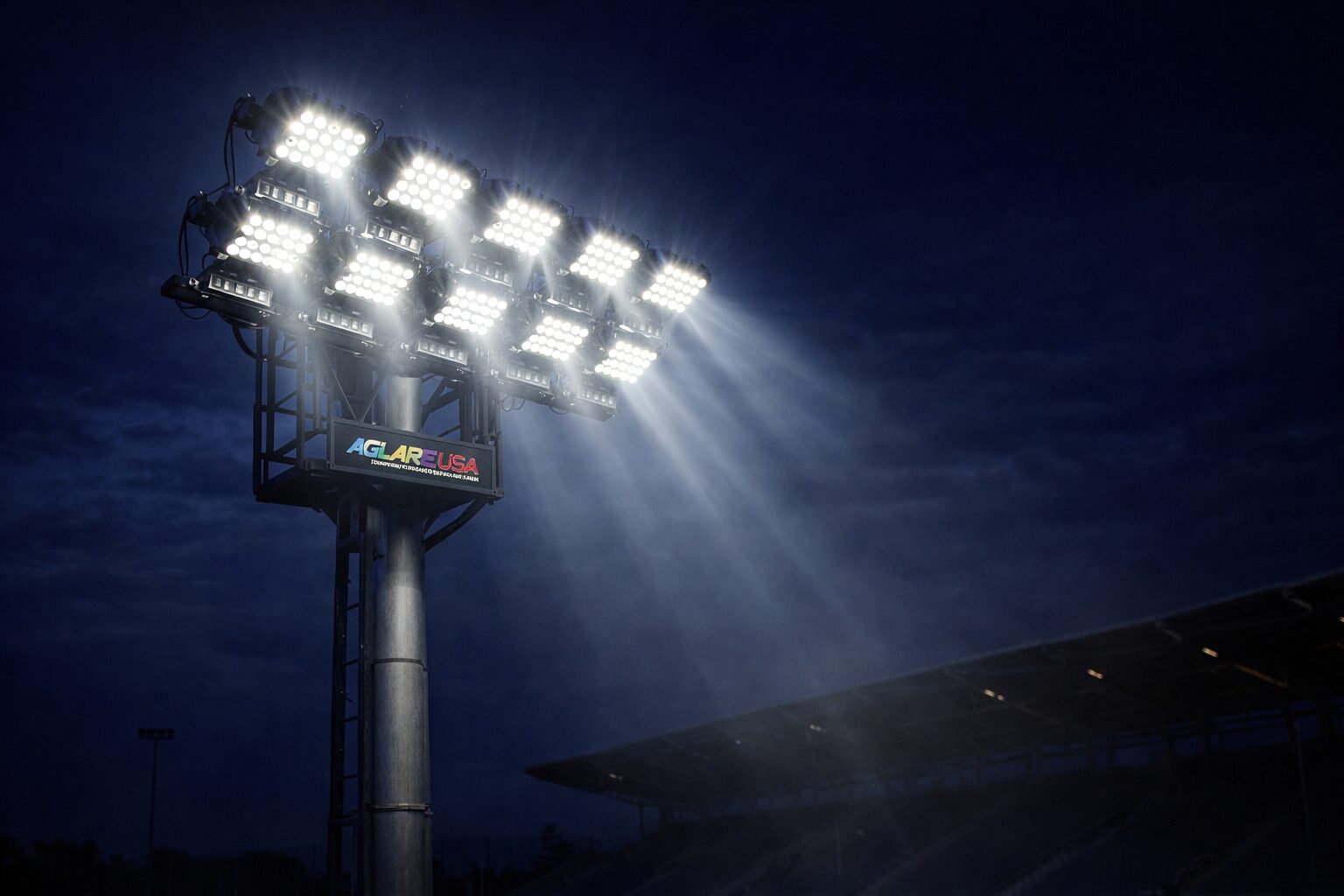
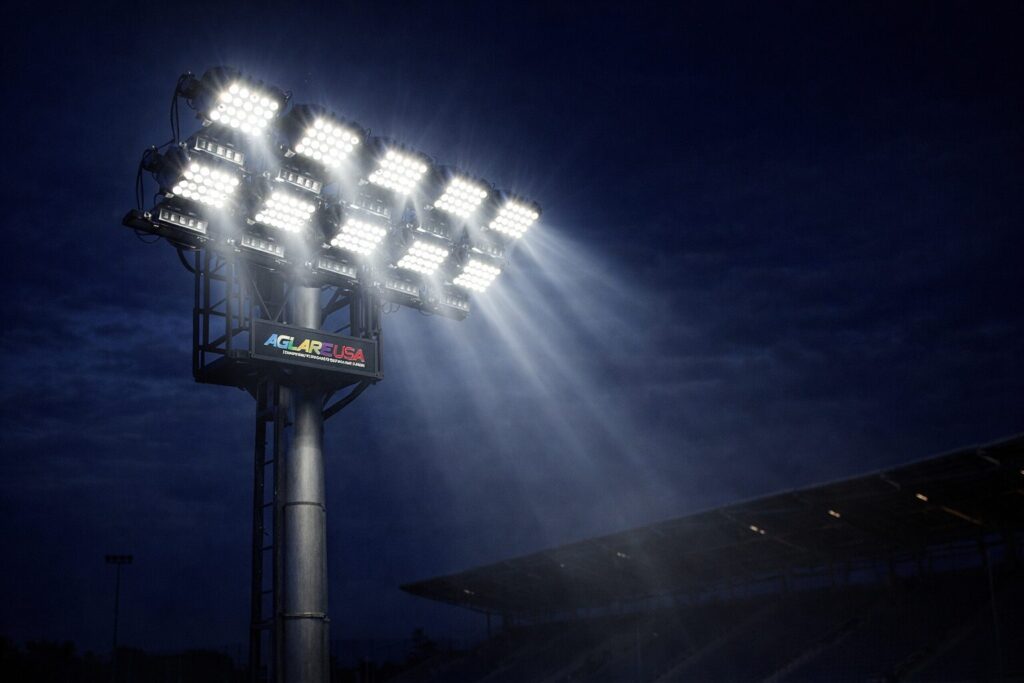
Buying stadium flood lights is a high-stakes technical decision that affects player visibility, spectator safety, broadcast quality, maintenance budgets, and long-term energy costs. Sports venues and large outdoor facilities need more than raw wattage — they need carefully planned light distribution, proven weather resistance, and fixtures engineered for demanding operating schedules.
Not All Stadium Flood Lights Are the Same
Stadium flood lights vary by wattage, beam angle, housing construction, optical efficiency, and mounting method. Aglare USA’s outdoor lighting catalog includes LED flood lights from 100W through 500W, with applications spanning sports courts, full-size stadiums, tunnels, parking structures, and other large-area exterior environments.
Choose Wattage Based on the Application, Not the Spec Sheet
Higher wattage does not automatically mean better lighting. The correct wattage depends on the area to be illuminated, mounting height, required lux levels, and the number of fixtures in the layout. A community sports court, a professional stadium perimeter, and a large public venue each require different lighting approaches. Good planning focuses on coverage uniformity and target lux levels, not just individual fixture power.
Beam Angle Controls Light Distribution
Beam angle is one of the most critical specifications in stadium lighting. A wider beam spreads light across a broader area with lower peak intensity, while a narrower beam concentrates output for long-throw applications like high-mast stadium lighting. Several Aglare USA flood light models offer adjustable module designs and interchangeable optics, which is valuable for projects that need precise photometric control.
Weather Resistance and Structural Durability
Outdoor sports lighting must perform reliably through rain, wind, dust, humidity, and extreme temperatures. IP65 protection, corrosion-resistant aluminum housings, and impact-rated lenses are essential — not optional. Aglare USA’s flood light range features IP65-rated fixtures with die-cast aluminum construction designed for long-term outdoor exposure.
Thermal Management Protects Performance and Lifespan
A fixture that overheats degrades faster, produces less light, and requires earlier replacement. Modern stadium flood lights use finned aluminum housings, modular LED arrays, and engineered airflow paths to dissipate heat during extended operation. For venues running lights through multi-hour events, training sessions, and nightly operations, thermal design directly affects fixture longevity and output consistency.
Plan for Installation and Long-Term Service Access
Fixtures mounted 25–40 meters above a playing field are expensive to reach for maintenance. Buyers should evaluate how easy each fixture is to install, aim, and service at height. A product that saves even one service call per year through superior reliability can create significant value over a 10–15 year project lifecycle.
Pre-Quote Specification Checklist
- Venue type and size (community field, professional stadium, multi-use arena)
- Required lux level and uniformity ratio
- Mounting height and number of mast positions
- Beam distribution requirements (narrow throw, wide flood, or mixed)
- Environmental conditions (coastal salt air, extreme heat, cold climate)
- Control system compatibility (dimming, scheduling, broadcast-sync)
Conclusion
The best stadium flood lights are selected through engineering-informed planning, not catalog browsing. Compare wattage, beam angle, weather protection, thermal design, and serviceability to find the right match for your sports or venue lighting project.
Sourcing LED stadium flood lights? Request a quote from Aglare USA to discuss your venue’s lighting requirements.

0 Comments